

What if AI's problem wasn't the users, but the tools we offer them?
Back from the Alpes-Maritimes municipalities trade show: CityPilot, a fully local AI, and a conviction about what really holds back AI adoption.
artificial intelligencelocal governmentinnovationCityPilot


On Thursday 15 October, EMERGING-IT was at the Salon des Communes et Intercommunalités des Alpes-Maritimes, the trade show for the region’s municipalities, in Mandelieu.
We were lucky enough to have the very first stand at the entrance. In other words, practically every visitor walked past us!
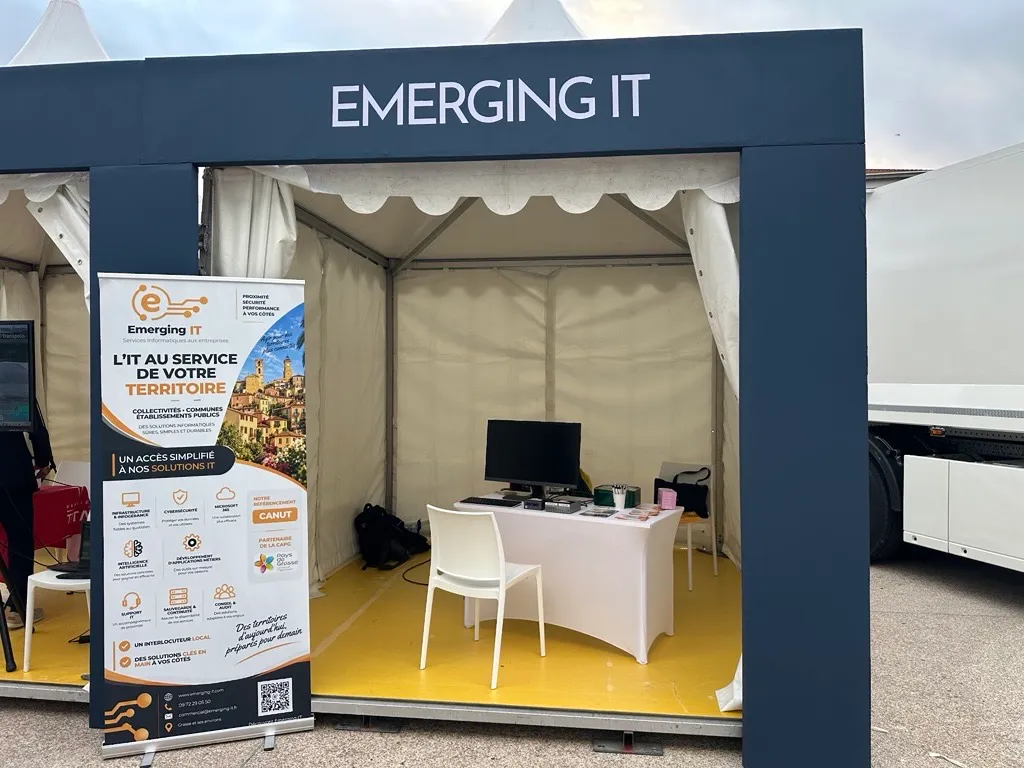
In the photo, you may notice a detail: the screen is off.
Yes, I had forgotten its power cable. For an IT professional, not a great start! 😂
After a quick emergency search, problem solved. We were ready to present CityPilot, an application we developed specifically for this show.
An AI running entirely locally
What set us apart? We had brought a real, working application, with an AI running entirely locally, without any Internet connection.
And at a trade show, that is far from a detail!
Between saturated Wi-Fi networks and 5G that is sometimes unusable, being able to keep running demos without depending on an outside connection was quite welcome.
The artificial intelligence ran on a small NVIDIA computer, an ASUS Spark GB10, right on our stand.
The visitors’ reaction
But the most interesting part was not the technology. It was the visitors’ reaction.
I had imagined a tool to help elected officials keep better track of their files and make their decisions.
In the end, the people who showed the most interest were often the mayors’ deputies and staff.
Why? Because they immediately saw what the application could bring to their day-to-day work.
A concrete example
Let’s take a concrete example.
A town hall is preparing renovation work in a school. The file contains quotes, grant applications, letters and administrative documents.
CityPilot analyses these documents, finds the amounts, deadlines and key information, then links the different documents together.
So far, that is already interesting.
But what really caught people’s attention was what happened when a new document was added.
The application resumed its analysis, identified the changes and recalculated the amounts.
A letter changes the scope of the work? The AI detects the difference, highlights the modified figures and flags any budget discrepancies.
No need to manually reread seven documents to understand what has just changed.
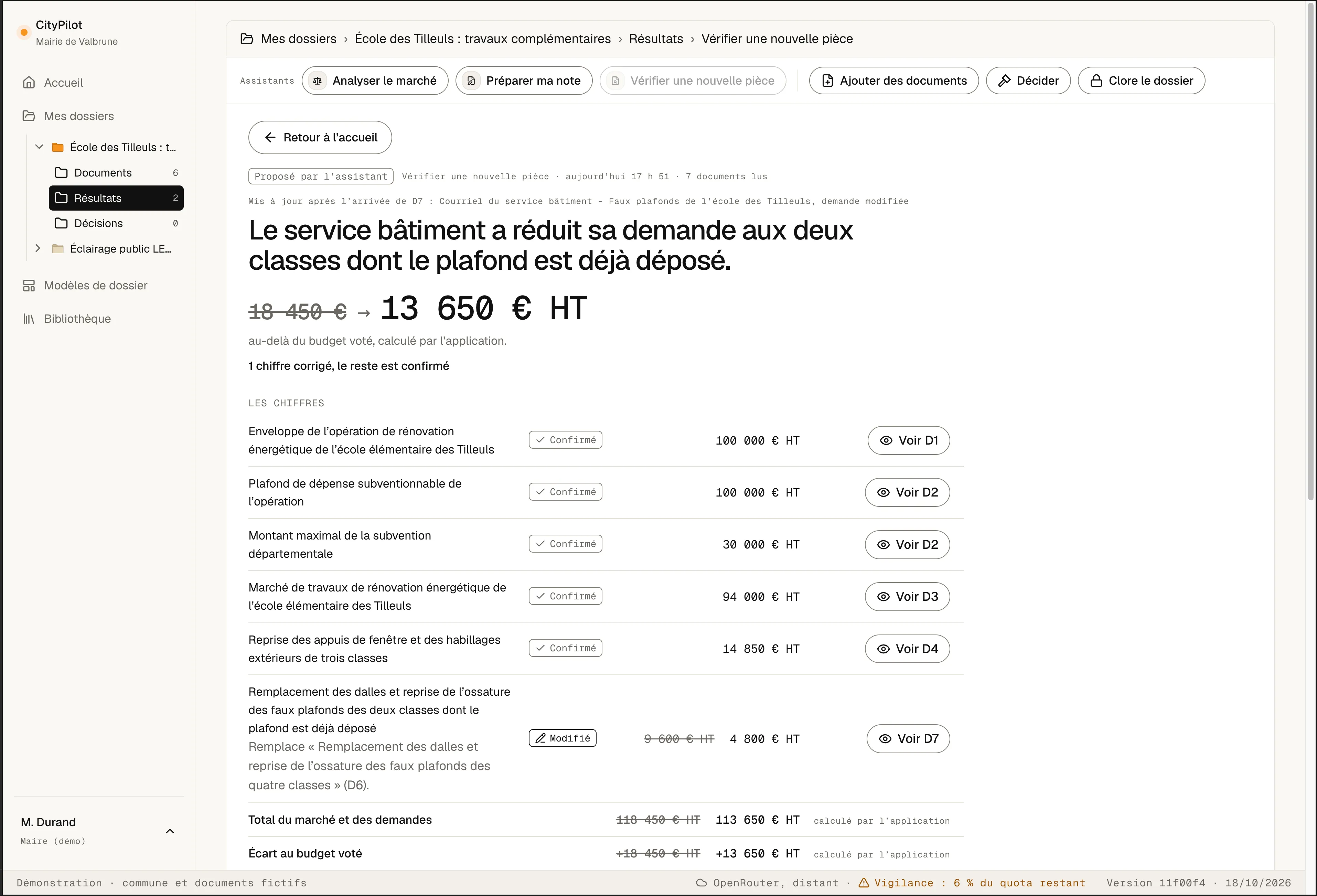
And that is when visitors started imagining all the possible uses in their own local authority.
Demos that shape the application
The funniest part is that the demos also made the application evolve!
Throughout the day, several visitors suggested ideas I had not necessarily thought of.
- Access rights management, for example: who can view a given file? Who can add documents to it?
- Another recurring request: being able to choose between a local AI and an external provider, such as Mistral AI or OpenAI.
I have developed this last feature since the show.
And I must admit that the results with Mistral Large 4 are particularly convincing in my first trials.
How much does an external AI cost?
Another question kept coming up: how much does using an external AI cost?
To give you an idea, I ran automated tests for practically an entire day. The billed consumption stayed under one dollar.
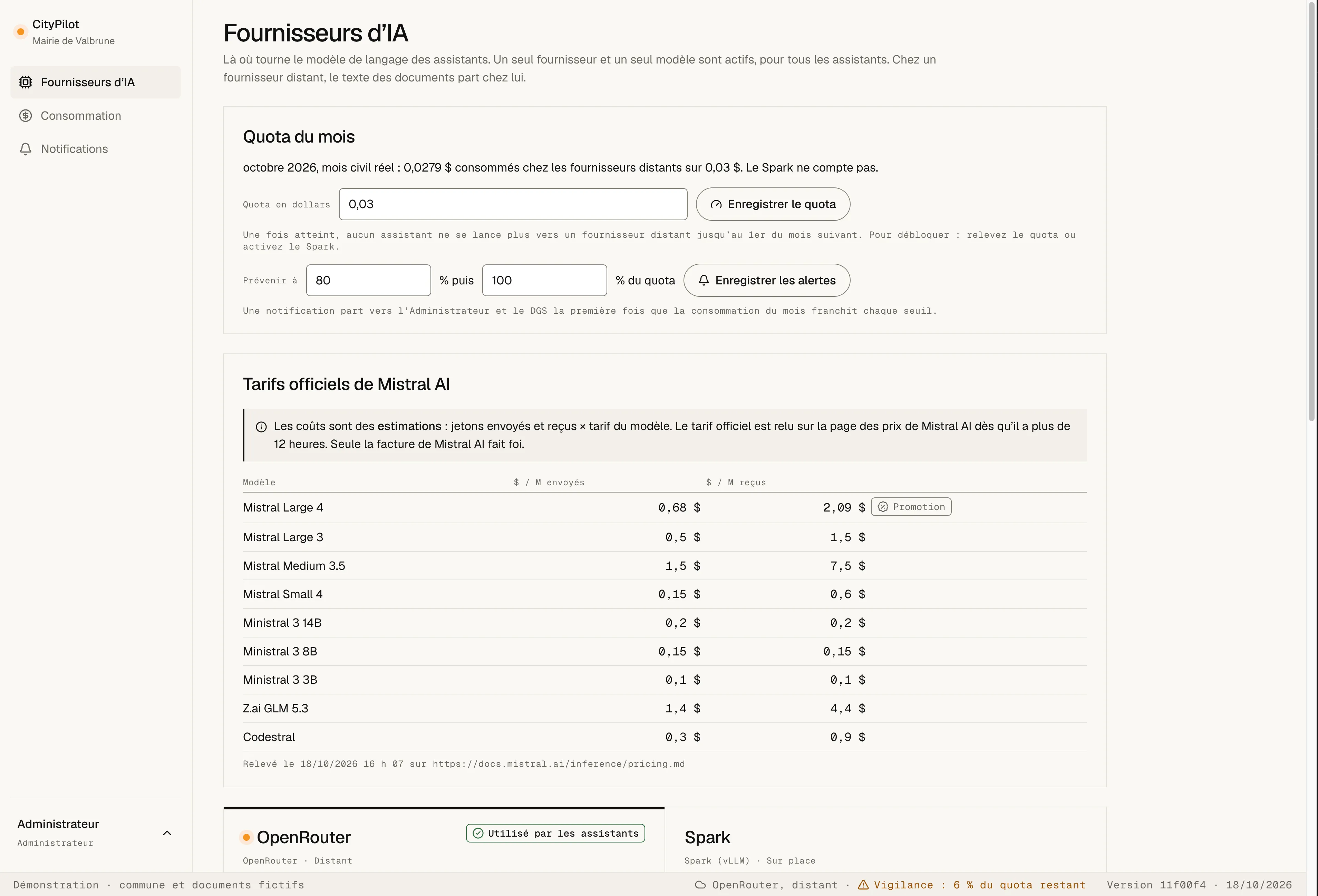
Of course, this is not a universal price: it all depends on the number of documents, their size and the model used. But it helps put some preconceived ideas about the cost of AI into perspective.
Several people even asked me whether CityPilot was already on the market.
I had to explain that this application was first and foremost a demonstrator, developed to showcase our expertise.
And that is probably the best feedback I could have hoped for.
The real challenge: building the right tools
Above all, I am leaving this show with a stronger conviction.
We often hear that companies, local authorities or their staff are lagging behind in adopting artificial intelligence.
But after all these conversations, I wonder whether the problem lies elsewhere.
People do not necessarily want to learn how to write prompts, choose between fifteen models or understand how an LLM works.
They simply want to be able to do their job more easily.
And when you show them an application that uses AI to solve a concrete problem, without asking them to completely change their habits, the interest is immediate.
Perhaps the real challenge of AI is not teaching everyone how to use it.
It is building the right tools so that everyone can benefit from it, almost without having to think about it.
That, at least, is what I take away from this day.
And you: do you think AI adoption depends more on training users or on building tools suited to their jobs?
Philippe